Media Producers & Products: Animation and
the Audience
‘As media
producers, how do Disney and Pixar appeal to their
audience through animation films and
media products.'
Media producers choose to specify their audiences they can do this by how they choose to construct their content. For example they choose what narratives are in the film and also how the film is laid out and and by the codes and conventions and via other outlets. Disney do this by aiming the majority of their animation films towards young children. Specifically young girls. They use quite symbolic images such as princesses who wear big dresses and wear pink and live in a castle as well as trying to find their 'prince charming' like in Cinderella. However Brave challenges the stereotypes placed on femininity and the ideals that are placed around the fact that every girl wants to grow up and find their 'prince charming' as in brave she has a choice but she wants to be able to make the choice of who she wants to marry and not be forced to marry someone and she wants to choose who own fate which goes against Disney and how they say girls should grow up and rely on a man which in more recent times is challenged not just in animation but in real life as the world changes. This then helps to specify the audience as the audience is different from when Cinderella was made but children still love Cinderella as it is a place they can scape to when they are young and think that they are a princess via merchandise etc and they will one day realise that this isn't the case. That is why I think Brave isn't aimed so much at young children but children and teenagers as teenagers have to soon realise that they are going to be in control of their own life and will not be able to rely on their parents etc and soon they will go through a phrase where they have to decide their own fate which is helping to specify an audience by using this example of teenagers.
The way the audience responds to media products is a huge factor within the making of films and animation. For example Disney use Cinderella as an example of someone who you should want to aim to be like as they make her the good and relatable character and they make the step sister people who children will not want to be like. If they did this the other way round and promoted that bullying and picking on someone who is not going to do anything back a good thing then the parent first and foremost would have something to say but it would have a negative effect on the audience watching the film which is most likely to be younger audiences who may imitate what happens in a film.
The hypodermic needle model means how the industry, in this case pixar and disney, inject the media into the audiences mind through the outlet of the film. They do this throughout all their films and they do it to reflect what ideologies they believe in and what the audience believes in. As an example they do this in Cinderella where she has to get a fairy godmother to change the way she looks so getting rid of the dirty rags and getting put into a fancy dress and shoes and then you could argue that this is how Disney are saying you fall in love and this could stress that it is all about appearance via this theory. This could be argued to be a bad thing as it may make children not like someone because they don't have the latest clothing or shoes. They challenge this ideology in Brave as Merida is still in a dress but it is not as glamorous as in Cinderella and she adds her own unique touch to it and she is not wanting to fall in love and wants to stay young an free for as long as she possibly can until she herself is ready to make decisions about the rest of her life. They way the audience receives this can be different as I may have different ideologies to a child or to anyone. Not everyone is the same in the way that receive a film but it will affect what choices they choose to make without them even realising and they the way the film is received by an audience all depends on what maybe going on in their life to anything that happens to them or has happened to them. Everyone has different ideologies but Disney like to change peoples ideologies in my opinion to make everyone believe in happiness ever after and this is good as everyone will be more happy and in the end Disney will make money which is their main goal. Pixar do this in a really good way as they mainly focus on challenging ideologies and how people think about certain and different situations. Which I personally feel is a good way to inject their media via the hypodermic needle theory as this will stick in the head of the audience for longer.
Cinderella and brave are similar in the way it is structured as good always triumphs over evil but the way they go about showing this via their films is completely different. The genre of princess/fantasy films is usually shown in the stereotypical way that it is in cinderella as her life is hard then something happens that changes this and then she eventually will live happily ever after. Brave challenges this stereotype as she is set up to marry someone but then she decides that she does not want to go through with it but instead wants to decide for herself. They also make the mother have a realisation that the world is changing which fits with the ideology that women no longer are a princess but can also make up their own minds and choose what they want for their future and not have it decided for them. The iconography of Cinderella is that everyone can be a princess and that is what eventually happens to Cinderella. They show this by making her dress really nice hen she goes to the ball and also by the end she has found her 'Prince Charming'. In Brave they challenge the iconography that every girl is destined to be with their prince charming but instead can do everything men can do as in the first scene Merida gets given a bow and her mother says that this should not be happening. As she gets older her mother strongly disagrees with Merida going out with her bow and arrow. This changes the stereotypical iconography of men being the 'hunter' and makes people question their ideologies of how men and women are different but makes the audience think how similar men and women can be. In Brave it challenges the historical context in a huge way. As the mother is choosing the groom for Merida. But Merida fights back to this and she changes the way people think about this towards the end the film. The mother eventually lets Merida choose her own fate and this changes the way everybody thinks in terms of marriage within royalty and that choosing someone else's future is not right even if that is what has always been done in history. In Cinderella they show that if you are pretty then you will find love.This is shown by Cinderella not wearing rags to the ball but instead getting a big fancy dress. You could argue that this is to make her fit in and not get caught by her sisters but it shows that people who look good find love as the ugly step sisters don't find love. You could also argue that Disney make Cinderella find love to show that evil never triumphs.
An animators first goal when animating is to entertain. They have to make sure the characters have a personality that the audience can relate to. Their is the key, 'audience'. The next thing that an animator has to do is to define the audience. First thing they do is profile the audience. For example before they start making the film they will profile the audience by looking at the psychographics, geodemographics, age, gender etc. For example Disney have defined their audience to young girls. It is not solely aimed towards them however their majority focus is aimed towards them as they make a lot of princess films that make the children want to be a princess and they will then be able to sell merchandise of the film such as outfits toys and other items to increase their revenue but to also entertain the audience, which links back to their first goal. This is the main goal for animators however the companies that produce this animation is to make money via the film sales and merchandise.
They have to address the audience by the selection of content they choose to put into the film. For example the words that the characters say, what is actually said by the characters, sounds used, the sequence of the what the characters do, the colours and also make the font likeable to their audience. For example Disney do this in Cinderella as they make her a girl who is treated badly by her step sister however she looks pretty and speaks nicely and doesn't do anything bad whereas the step sisters look ugly and they do this to try and influence the audience to make the audience feel sorry for cinderella and in the end good always triumphs over evil. This is the opposite to Brave. In Brave the main antagonist ,Merida, looks quite untidy and always wants her hair to be messy and tries to fight against the stereotypical look of a 'princess'. However even though she doesn't want to be a 'stereotypical princess she is still what the animators are trying to et the audience to relate to and make the audience attach to her and no the evil bear who they are trying to make the audience scared of and they do this by using the colour black which is a dark colour and this colour can represent death and darkness. Whereas Merida wears the colour green which is a light colour and can represent good. Disney did change the way Merida looks on their website as they 'Disney-fied' her and made her into a real 'princess. Their was a huge debate about if this was the right thing to do as Disney want to make children think everything is based around the ideology of girls becoming princesses.
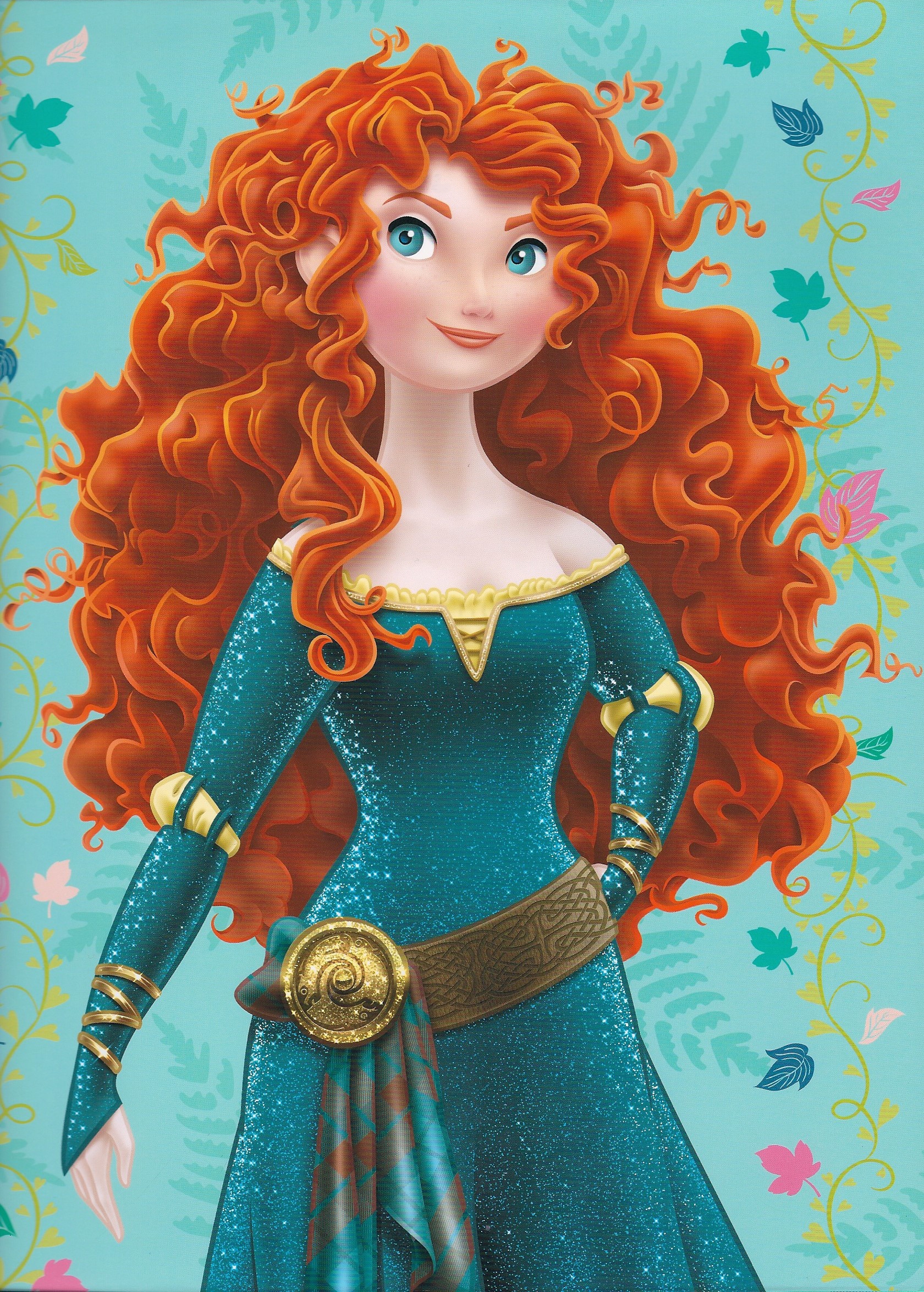 |
| Disney version of Merida from the film Brave |
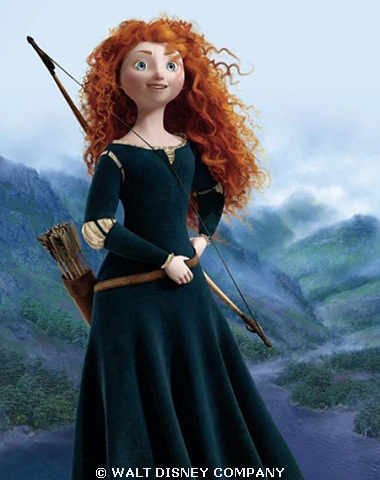 |
| Pixar version of Merida from the film Brave |
Media producers choose to specify their audiences they can do this by how they choose to construct their content. For example they choose what narratives are in the film and also how the film is laid out and and by the codes and conventions and via other outlets. Disney do this by aiming the majority of their animation films towards young children. Specifically young girls. They use quite symbolic images such as princesses who wear big dresses and wear pink and live in a castle as well as trying to find their 'prince charming' like in Cinderella. However Brave challenges the stereotypes placed on femininity and the ideals that are placed around the fact that every girl wants to grow up and find their 'prince charming' as in brave she has a choice but she wants to be able to make the choice of who she wants to marry and not be forced to marry someone and she wants to choose who own fate which goes against Disney and how they say girls should grow up and rely on a man which in more recent times is challenged not just in animation but in real life as the world changes. This then helps to specify the audience as the audience is different from when Cinderella was made but children still love Cinderella as it is a place they can scape to when they are young and think that they are a princess via merchandise etc and they will one day realise that this isn't the case. That is why I think Brave isn't aimed so much at young children but children and teenagers as teenagers have to soon realise that they are going to be in control of their own life and will not be able to rely on their parents etc and soon they will go through a phrase where they have to decide their own fate which is helping to specify an audience by using this example of teenagers.
The way the audience responds to media products is a huge factor within the making of films and animation. For example Disney use Cinderella as an example of someone who you should want to aim to be like as they make her the good and relatable character and they make the step sister people who children will not want to be like. If they did this the other way round and promoted that bullying and picking on someone who is not going to do anything back a good thing then the parent first and foremost would have something to say but it would have a negative effect on the audience watching the film which is most likely to be younger audiences who may imitate what happens in a film.
The hypodermic needle model means how the industry, in this case pixar and disney, inject the media into the audiences mind through the outlet of the film. They do this throughout all their films and they do it to reflect what ideologies they believe in and what the audience believes in. As an example they do this in Cinderella where she has to get a fairy godmother to change the way she looks so getting rid of the dirty rags and getting put into a fancy dress and shoes and then you could argue that this is how Disney are saying you fall in love and this could stress that it is all about appearance via this theory. This could be argued to be a bad thing as it may make children not like someone because they don't have the latest clothing or shoes. They challenge this ideology in Brave as Merida is still in a dress but it is not as glamorous as in Cinderella and she adds her own unique touch to it and she is not wanting to fall in love and wants to stay young an free for as long as she possibly can until she herself is ready to make decisions about the rest of her life. They way the audience receives this can be different as I may have different ideologies to a child or to anyone. Not everyone is the same in the way that receive a film but it will affect what choices they choose to make without them even realising and they the way the film is received by an audience all depends on what maybe going on in their life to anything that happens to them or has happened to them. Everyone has different ideologies but Disney like to change peoples ideologies in my opinion to make everyone believe in happiness ever after and this is good as everyone will be more happy and in the end Disney will make money which is their main goal. Pixar do this in a really good way as they mainly focus on challenging ideologies and how people think about certain and different situations. Which I personally feel is a good way to inject their media via the hypodermic needle theory as this will stick in the head of the audience for longer.
Cinderella and brave are similar in the way it is structured as good always triumphs over evil but the way they go about showing this via their films is completely different. The genre of princess/fantasy films is usually shown in the stereotypical way that it is in cinderella as her life is hard then something happens that changes this and then she eventually will live happily ever after. Brave challenges this stereotype as she is set up to marry someone but then she decides that she does not want to go through with it but instead wants to decide for herself. They also make the mother have a realisation that the world is changing which fits with the ideology that women no longer are a princess but can also make up their own minds and choose what they want for their future and not have it decided for them. The iconography of Cinderella is that everyone can be a princess and that is what eventually happens to Cinderella. They show this by making her dress really nice hen she goes to the ball and also by the end she has found her 'Prince Charming'. In Brave they challenge the iconography that every girl is destined to be with their prince charming but instead can do everything men can do as in the first scene Merida gets given a bow and her mother says that this should not be happening. As she gets older her mother strongly disagrees with Merida going out with her bow and arrow. This changes the stereotypical iconography of men being the 'hunter' and makes people question their ideologies of how men and women are different but makes the audience think how similar men and women can be. In Brave it challenges the historical context in a huge way. As the mother is choosing the groom for Merida. But Merida fights back to this and she changes the way people think about this towards the end the film. The mother eventually lets Merida choose her own fate and this changes the way everybody thinks in terms of marriage within royalty and that choosing someone else's future is not right even if that is what has always been done in history. In Cinderella they show that if you are pretty then you will find love.This is shown by Cinderella not wearing rags to the ball but instead getting a big fancy dress. You could argue that this is to make her fit in and not get caught by her sisters but it shows that people who look good find love as the ugly step sisters don't find love. You could also argue that Disney make Cinderella find love to show that evil never triumphs.

No comments:
Post a Comment